
While the guitar is a versatile instrument on its own, incorporating unexpected instruments can significantly enhance its sound.
For instance, a violin can add a rich, melodic layer, creating a contrast that enriches the overall texture of a song.
Similarly, the use of a synthesizer can introduce electronic elements that broaden the tonal palette, combining traditional and modern sounds.
Additionally, a harmonica can serve as a compelling accompaniment, adding a bluesy quality that complements guitar riffs.
Percussion instruments such as cajóns can provide rhythmical depth, transforming a simple guitar performance into a full-bodied musical experience.
By creatively blending these instruments, musicians can achieve a unique sound that stands out in today’s music landscape.
- Kalimba adds a melodic layer to guitar performances.
- Hang Drum provides rhythmic texture and ambience.
- Omnichord offers unique strumming patterns and soundscapes.
- Theremin creates ethereal effects and pitch modulation.
- Cajón delivers versatile percussive elements and beats.
There are additional layers to explore beyond the instruments mentioned.
I will discuss how these instruments can be blended with different guitar techniques to create a fuller sound.
I will also examine how various musical styles benefit from incorporating these unconventional instruments.
Understanding their potential can inspire innovation in your music and broaden your creative horizons.
1. Kalimba
The kalimba, a traditional African instrument often referred to as a thumb piano, has captivated musicians and listeners alike with its enchanting melodies.
This instrument consists of a wooden board with a series of metal tines, which are plucked by the thumbs to produce a range of tones that can be both soothing and uplifting.
One of the most appealing aspects of the kalimba is its ability to enhance the overall sound of a guitar performance.
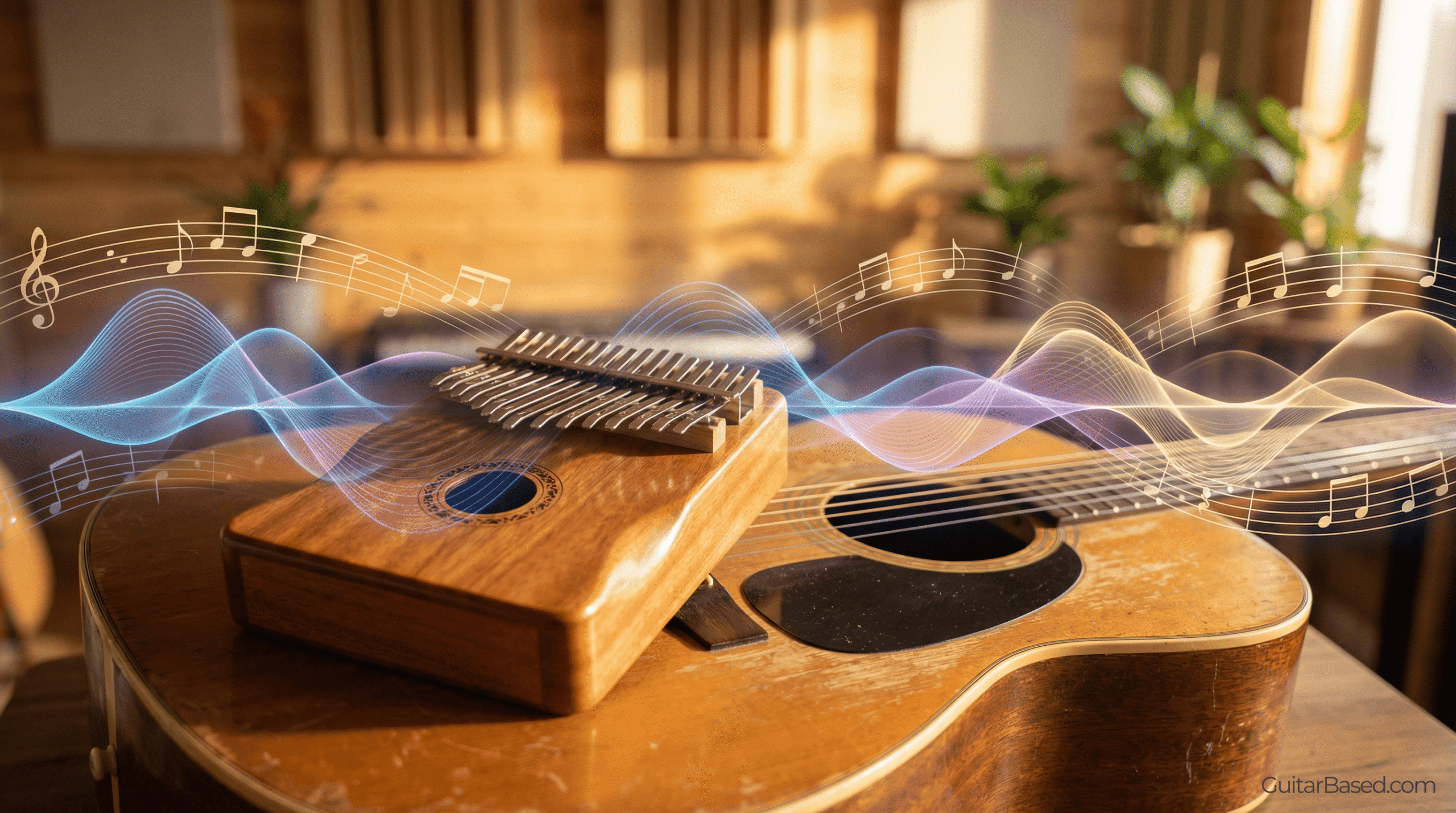
Its unique sound can complement the guitar’s tones brilliantly, offering a refreshing layer to the music that is often unexpected in more conventional setups.
The timbre of the kalimba is bright and resonant, which can fill the auditory space around a guitar, creating a beautiful contrast to the deeper notes commonly produced on stringed instruments.
Incorporating this instrument can evoke a sense of tranquility and warmth, providing a relaxing backdrop to guitar melodies.
Additionally, the compact and portable nature of the kalimba makes it an incredibly convenient choice for musicians on the go.
It requires no additional equipment or setup and can be played anywhere, making it an ideal companion for both practice sessions and live performances.
Furthermore, the techniques used to play the kalimba can be surprisingly diverse.
Musicians can explore various styles ranging from traditional African melodies to contemporary pop and jazz, ensuring that it fits well with numerous genres.
When utilizing the kalimba alongside a guitar, it’s important to recognize the different ways they can interact harmoniously.
For instance, the following ideas can be useful during collaborations:
- Utilizing the kalimba to create harmonic layers that support the guitar’s main melody.
- Playing rhythmic patterns with the kalimba to enhance the guitar’s groove.
- Adapting traditional kalimba tunes to accompany guitar improvisations.
- Experimenting with different tunings to find perfect blends between the two instruments.
By implementing these ideas, one can unveil a multitude of sonic possibilities that elevate both instruments’ contributions to a piece of music.
When playing the kalimba, the player can also focus on developing their own style, which can fuse their personal sound with that of the guitar.
This creates a unique musical identity that reflects individuality and artistry, enriching the overall listening experience.
Moreover, a kalimba can be easily recorded or amplified, allowing for incorporation in various musical projects without losing its distinctiveness.
Pro Tip: The kalimba enhances the overall sound of a guitar performance by providing a bright and resonant timbre that complements and contrasts with the guitar’s deeper notes.
It’s fascinating how a simple wooden instrument can have such a profound impact on a guitar sound, enhancing melodies and providing intricate textures.
The beauty of the kalimba lies in its accessibility and universal appeal, making it a fantastic addition to any musician’s arsenal.
2. Hang Drum
The Hang Drum, also known as a Handpan, is a relatively new instrument that emerged in the early 2000s, captivating musicians and listeners alike.
This unique instrument has gained immense popularity due to its ethereal tones and captivating rhythmic capabilities that can beautifully complement the sound of the guitar.
Crafted from two sheets of metal that are bonded together, the Hang Drum features a series of tonal dimples or notes on its surface, each producing a distinct pitch when struck.
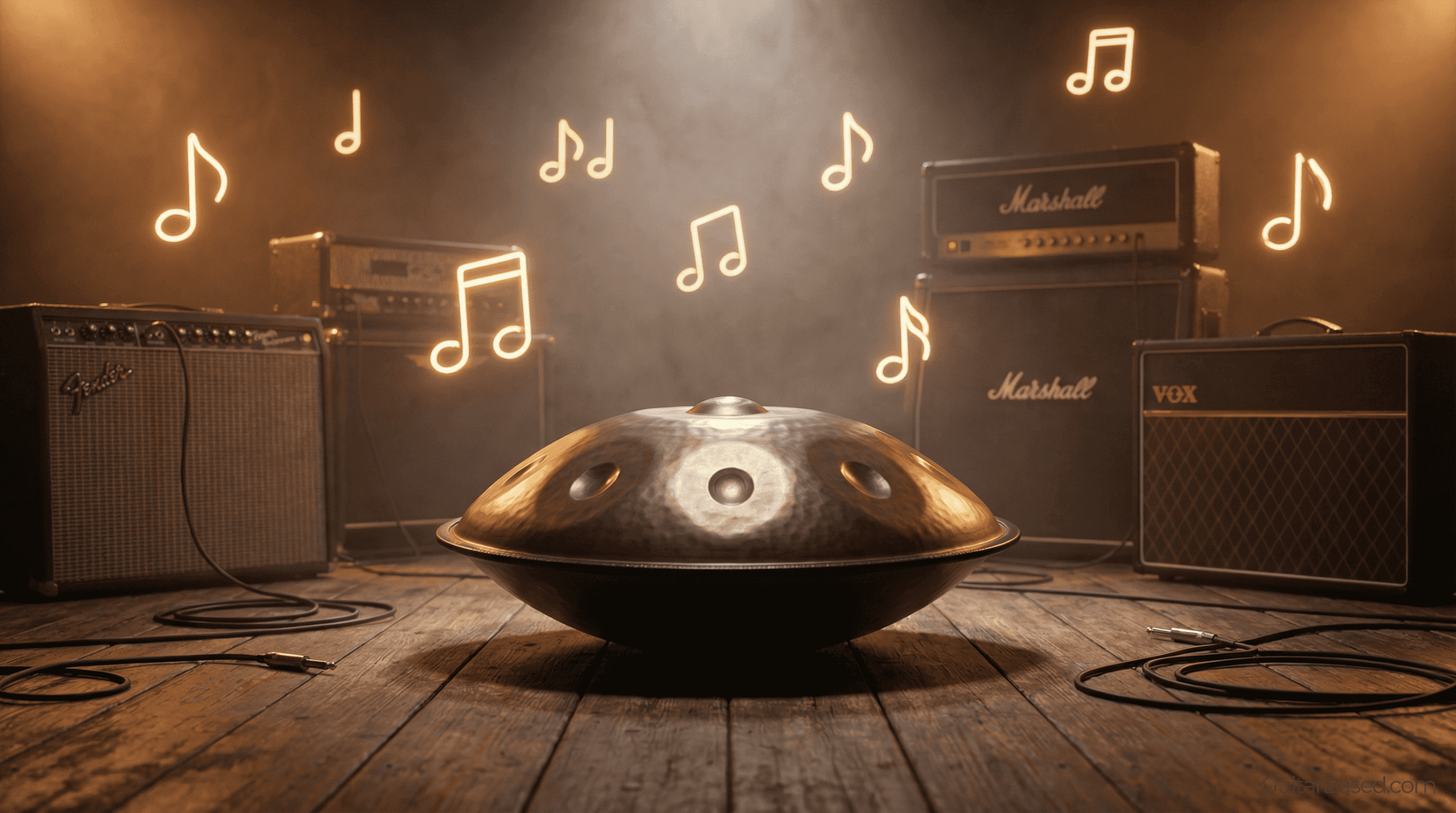
One of the most remarkable aspects of the Hang Drum is its versatility; it can be played solo or in conjunction with various other instruments, including the guitar.
The soothing sounds of the Hang Drum can create a magical atmosphere, making it an excellent addition to any musical ensemble, particularly when paired with an acoustic guitar.
When combining these two instruments, the guitar often serves as the harmonic foundation, while the Hang Drum adds a layer of melodic richness and percussive texture.
Musicians are increasingly discovering ways to integrate the Hang Drum into their songwriting process, allowing for a broader range of creative expression through its enchanting sounds.
The Hang Drum’s soothing tones can provide a gentle undercurrent to a fingerstyle guitar piece, enhancing both the performance and the listening experience.
Moreover, the Hang Drum’s resonance and sustain can fill the sonic space in ways that evoke a sense of tranquility, contrasting pleasantly with the sharper tones of the guitar.
For guitarists who are exploring modal progressions or creating soundscapes, the Hang Drum offers a new palette of notes that can inspire fresh ideas and unique musical directions.
Improvisation is another area where the Hang Drum shines; its intuitive playing style allows guitarists to experiment freely with melodies and harmonies.
This instrument can also appeal to those interested in world music, as its origins and sounds can be traced back to various cultures, enriching the overall guitar sound with global influences.
In a collaborative setting, the Hang Drum encourages a conversational style of music-making, wherein musicians respond to one another in real-time, fostering a profound connection through their artistry.
Furthermore, incorporating the Hang Drum into guitar performances can add depth to a musician’s repertoire, captivating audiences with its unfamiliar yet inviting sound.
Whether used in a live performance or as a tool for personal exploration, the Hang Drum undoubtedly brings a unique charm to guitar-based music that can elevate it to new heights.
3. Omnichord
The Omnichord is a unique instrument that has captured the fascination of both musicians and enthusiasts alike.
Originally introduced by Suzuki in the 1980s, this electronic string instrument combines the functions of a synthesizer and a simple chord organ.
Its distinctive design features a large, flat surface with corresponding buttons for chords, allowing players to produce rich sounds effortlessly.
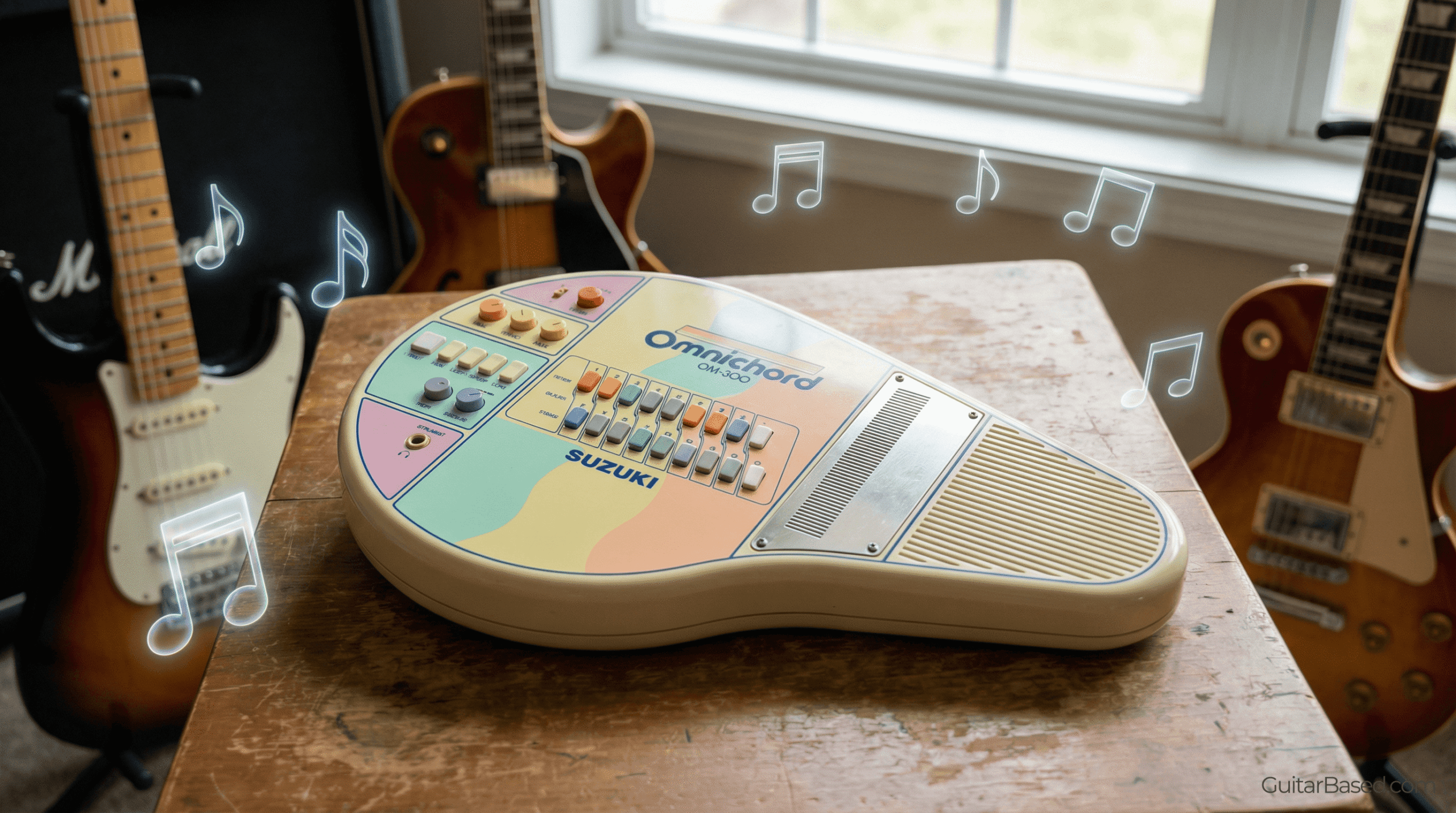
What makes the Omnichord particularly interesting is its incorporation of a tactile interface, which provides an engaging way to interact with musical notes.
The instrument produces sound through the use of electronic circuits, making it versatile for various forms of music.
Using the Omnichord provides an opportunity to create unique sounds that can complement and enhance your guitar playing.
Incorporating the Omnichord into your music can result in a beautiful combination of textures, particularly in genres such as folk and ambient.
Moreover, the gentle, ethereal sounds it produces can serve as an excellent backdrop for guitar melodies.
For those looking to explore its functionalities, here are a few notable aspects of the Omnichord:
- Chord buttons: These allow quick transitions between various chords and make it accessible for all skill levels.
- Strum plate: The responsive surface can be used to create strumming sounds that can add depth to your compositions.
- Sound variations: Different settings can produce a wide range of sounds, making it a flexible tool for experimentation.
- Portability: Its lightweight design makes it easy to carry, allowing for spontaneous jam sessions anywhere.
- Compatibility: The Omnichord can be easily integrated with other instruments, enhancing overall sound.
Each of these features contributes to the distinctive sound it offers, setting it apart from more traditional instruments.
When playing the guitar alongside an Omnichord, you might notice that its sounds can beautifully complement the guitar’s richness.
For instance, you could experiment with the Omnichord’s ambient chords that create a lush harmonic foundation, allowing your guitar riffs to soar above.
Many musicians are drawn to the unconventional sound of the Omnichord, which can offer a refreshing twist to their typical guitar arrangements.
Furthermore, its ability to produce both melismatic phrases and rhythmic strumming can enhance the overall musical narrative.
The manipulating of tones and sounds on the Omnichord requires creativity and offers an exciting challenge for those seeking to expand their musical vocabulary.
As you integrate the Omnichord into your music-making process, find ways to experiment with layering the textures from both instruments.
Some artists have successfully used the Omnichord to accompany solo guitar performances, emphasizing its adaptability to various musical styles.
For aspiring musicians looking to explore new sonic territories while playing guitar, the Omnichord serves as a gateway to a more expansive sound experience.
4. Theremin
The theremin is one of the most fascinating and unconventional instruments available today.
Invented in the early 20th century by Leon Theremin, it holds a unique position in the realm of musical instruments due to its electronic nature and the way it is played.
Unlike traditional instruments, the theremin produces sound without any physical contact, which adds an element of mystique and curiosity.
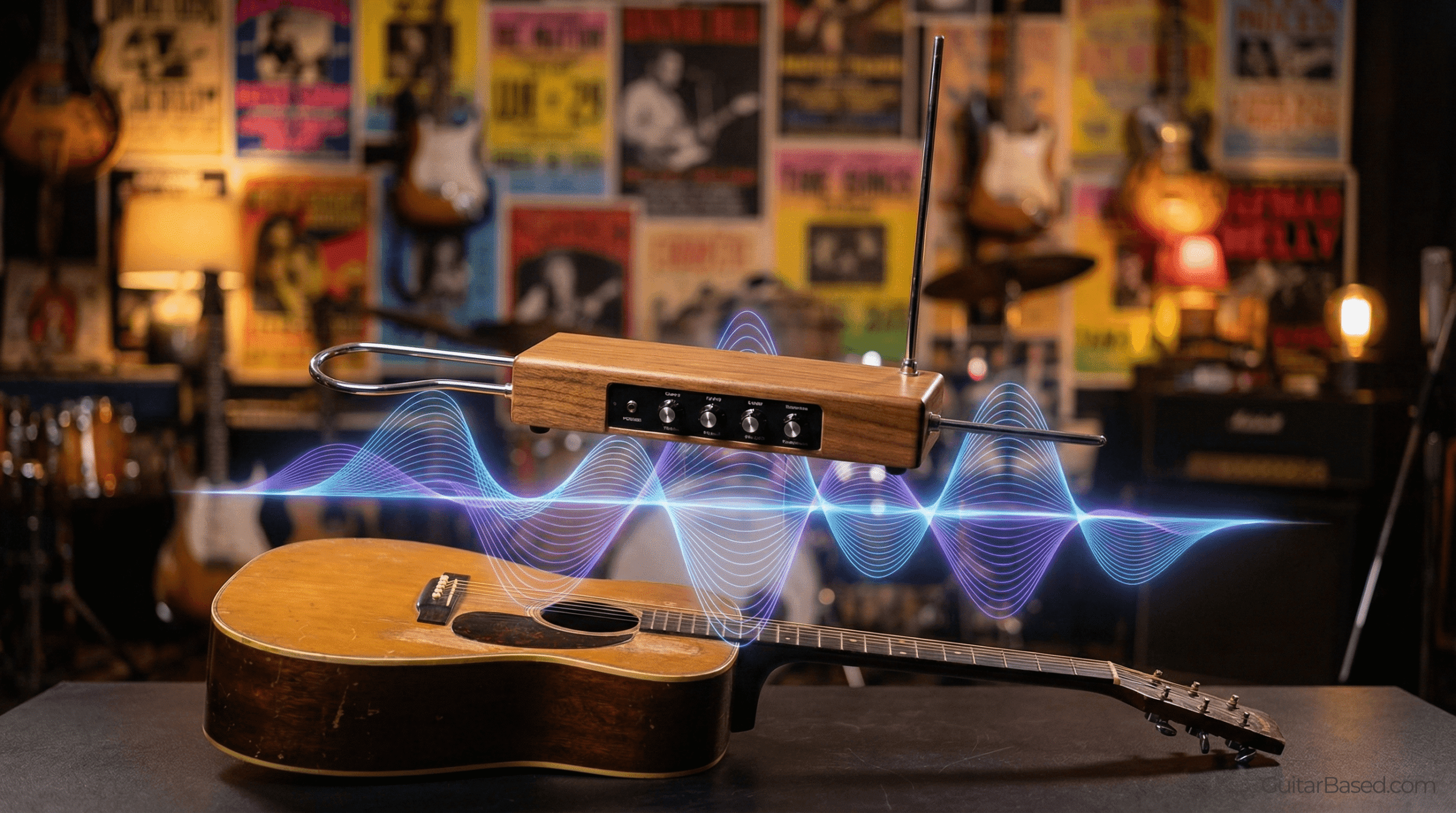
To play the theremin, a musician uses two metal antennas that sense the position of the player’s hands, allowing for pitch and volume control.
This control mechanism creates eerie and otherworldly sounds that have become iconic in various music genres, particularly in science fiction film scores.
The ethereal tones of the theremin can beautifully complement the sound of a guitar, enriching the overall musical experience.
Many guitarists are intrigued by the theremin’s ability to produce gliding notes and expressive pitch bends, qualities that synthesizers also emulate.
When integrated into guitar music, the theremin can add depth and dimension, transforming a straightforward composition into something truly captivating.
Using the theremin in live performances can create a striking visual and auditory experience, as movement and sound become intrinsically linked.
Guitarists who collaborate with theremin players often report that the juxtaposition of the guitar’s rhythmic strumming and the theremin’s floating melodies leads to a more engaging performance.
Moreover, the theremin’s sound can serve as a unique layer of ambiance, enhancing atmospheric tracks ranging from ambient to rock.
In addition, the theremin can be used to experiment with sonic textures, allowing guitarists to explore uncharted territories in their music.
The instrument encourages musicians to think outside the box, pushing boundaries that often confine traditional musical styles.
With its broad historical connections,having been used by famous composers and featured in notable recordings,the theremin carries a rich legacy that can inspire creativity among contemporary musicians.
Pro Tip: The theremin uniquely produces sound without physical contact, utilizing metal antennas that sense hand positions, allowing musicians to create eerie sounds that enhance various music genres, notably science fiction film scores.
Incorporating the theremin into a song’s arrangement can lead to unpredictable soundscapes and unexpected moments, ensuring that no two performances are ever alike.
Thus, exploring the theremin alongside the guitar can unlock a plethora of possibilities for musical expression, inviting artists to look more deeply into their craft and audience engagement.
5. Cajón
The cajón, a box-shaped percussion instrument originally from Peru, has gained immense popularity in various musical genres around the world.
What makes the cajón particularly interesting is its ability to enhance your overall sound when played alongside a guitar.
The instrument itself is typically made from wood, and its hollow body resonates to produce a variety of rich tones.
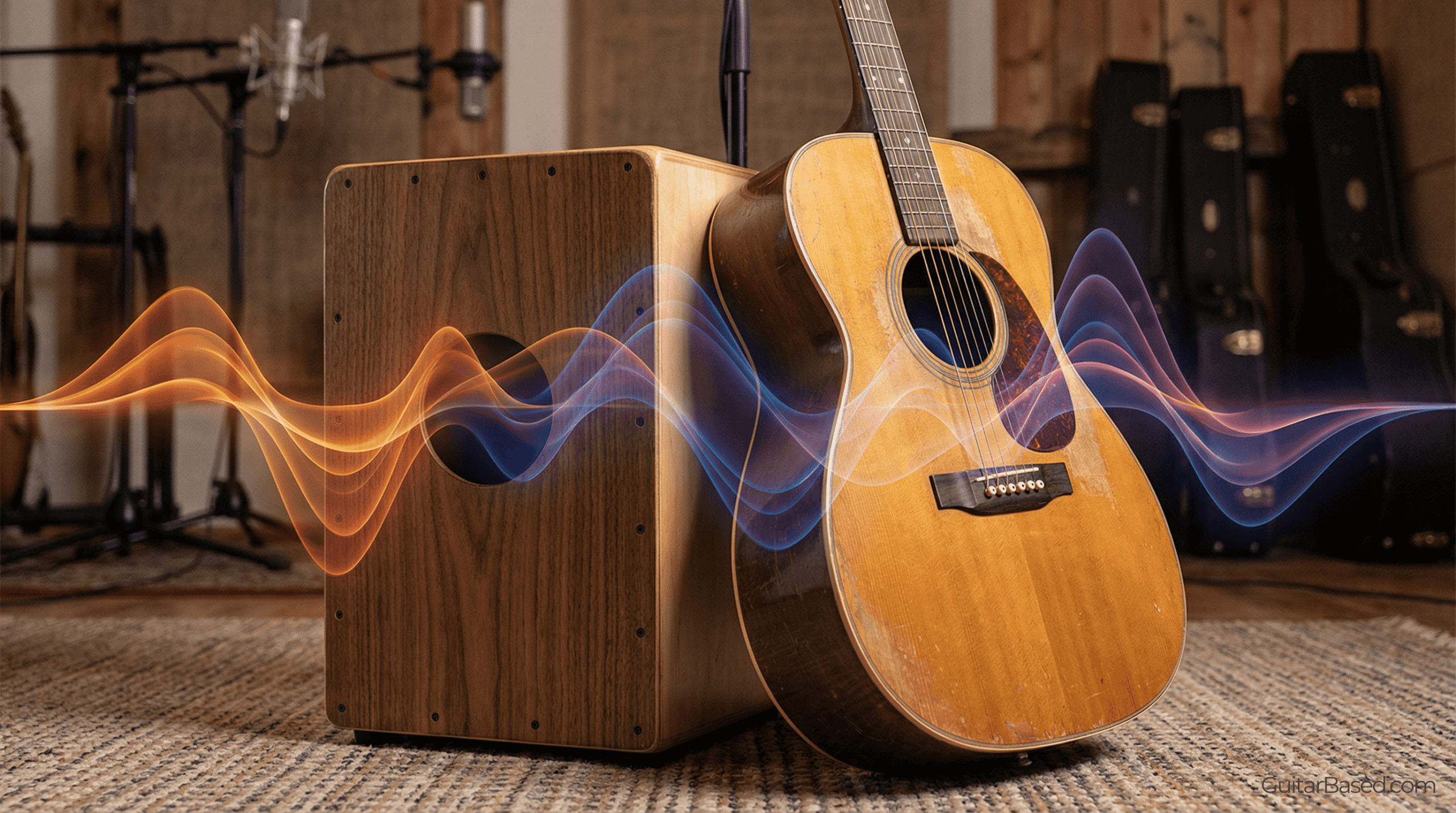
Using a cajón while accompanying guitar can add a distinct percussive element that is rhythmically engaging, thereby enriching the overall music experience.
To achieve diverse sounds from the cajón, players can strike different areas of the drum’s face; the center produces a warm bass tone, while the edges elicit sharper, snappier sounds.
This ability to create multiple tones makes the cajón a versatile partner for guitarists looking to add depth to their music.
Moreover, the cajón is relatively easy to play, making it accessible for beginners and seasoned musicians alike.
When you play the cajón alongside a guitar, you introduce a drumming element that fills out the sonic space, adding a captivating rhythmic structure.
To illustrate its unique qualities, consider these common aspects of playing the cajón:
- Portability: The cajón is light and easy to transport, allowing for impromptu jam sessions.
- Dynamic range: Players can adjust their striking intensity to create soft or intense rhythms.
- Variety of styles: It blends seamlessly into genres such as flamenco, jazz, and pop, expanding musical possibilities.
- Affordable: Compared to many other percussion instruments, the cajón is relatively inexpensive, making it accessible.
- Social connection: Playing the cajón can foster unity among musicians, creating a fun and collaborative atmosphere.
As guitarists seek to diversify their instrument palette, incorporating the cajón can greatly influence their rhythmic approach.
Many artists find that the connection between the guitar and the cajón is profound, providing a seamless interplay of melody and rhythm.
In fact, numerous musicians have adopted the cajón, showcasing its strength in live performances, where it can easily fill the room with sound.
Additionally, the cajón encourages a sense of community during music-making, allowing musicians to easily engage with one another, even without extensive practice.
For aspiring guitarists looking to expand their abilities, a platform like GuitarBased offers valuable resources that can enhance their understanding of rhythm.
Pro Tip: To enhance your guitar playing, consider incorporating a cajón to add a dynamic percussive element that enriches your sound and engages your audience.
By utilizing lessons and practice materials on platforms like GuitarBased, musicians can learn to integrate instruments like the cajón into their playing style effectively.
In the end, a cajón can transform the way a guitarist approaches performance, adding a layering of sound and texture that is not easily achieved with a guitar alone.
6. Melodica
The melodica is a fascinating and unique instrument that combines the characteristics of both keyboard and wind instruments.
With its compact design and captivating tones, the melodica can serve as an unexpected yet effective addition to your guitar sound.
One of the most appealing aspects of the melodica is its versatility, allowing it to be played in various musical styles ranging from jazz to folk.
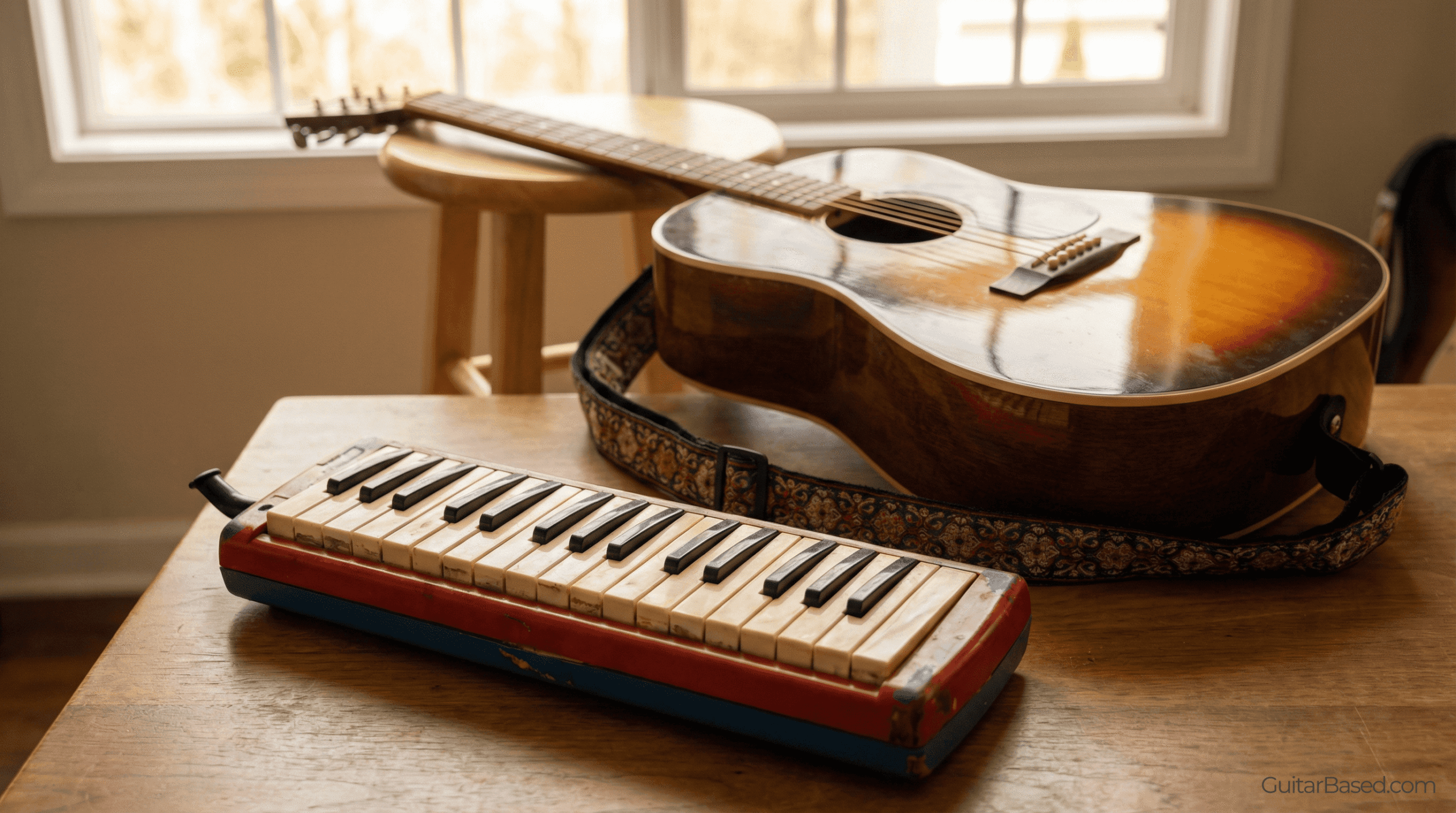
By breathing into a mouthpiece, players produce sound, meaning the melodica requires a certain level of breath control similar to that of woodwind instruments.
This unique playing method can introduce an entirely new dynamic to your guitar compositions, enhancing melodies and harmonies.
Furthermore, when paired with guitar, the melodica can create a rich texture that is often missing from standard guitar arrangements.
For instance, using the melodica to play supplemental melodies or harmonizing with the guitar can deliver a fuller, more layered sound experience.
Its ability to execute sustained notes effectively provides an opportunity for guitarists to experiment with ambient sounds, establishing a dreamy atmosphere that is hard to achieve with guitar alone.
Many musicians appreciate the portability of the melodica, making it an incredibly convenient instrument for travel, rehearsals, or live performances.
Its keyboard layout allows for intuitive play, ideal for guitarists already familiar with musical scales and chords.
This familiarity can ease the transition from guitar to melodica, empowering players to create unique combinations and explore their creativity.
Many renowned artists and groups have successfully incorporated the melodica into their music, showcasing its distinctive sound and wide-ranging capabilities.
Notably, the melodica’s tonal qualities can complement the warm sound of a guitar, offering a blend that is both refreshing and enthralling.
Moreover, melodica can function as a solo instrument, enabling guitarists to switch up their performances and showcase their multifaceted skills.
Experimenting with different playing techniques, such as staccato or legato, can produce captivating and diverse auditory effects while playing alongside guitar.
Finally, many guitarists find that the melodica not only enhances their musical capabilities but also fosters a deeper appreciation for wind instruments in general.
The Bottom Line
Exploring these six unexpected instruments can open up new avenues for creativity in your music.
Each instrument offers a unique sound that can beautifully complement your guitar playing.
From the warm tones of the kalimba to the ethereal notes of the theremin, there’s a lot to discover.
Incorporating these instruments can add depth and richness to your compositions.
Don’t be afraid to experiment and find ways to blend these sounds into your musical palette.
Enhancing your guitar sound doesn’t have to stick to the same old techniques; let your imagination lead the way!

More than 10 years of experience playing and writing about guitars! When not writing, I can be found strumming away some Johnny Cash tunes. Favorite all time guitar is the Gibson Les Paul. #TeamGibson
